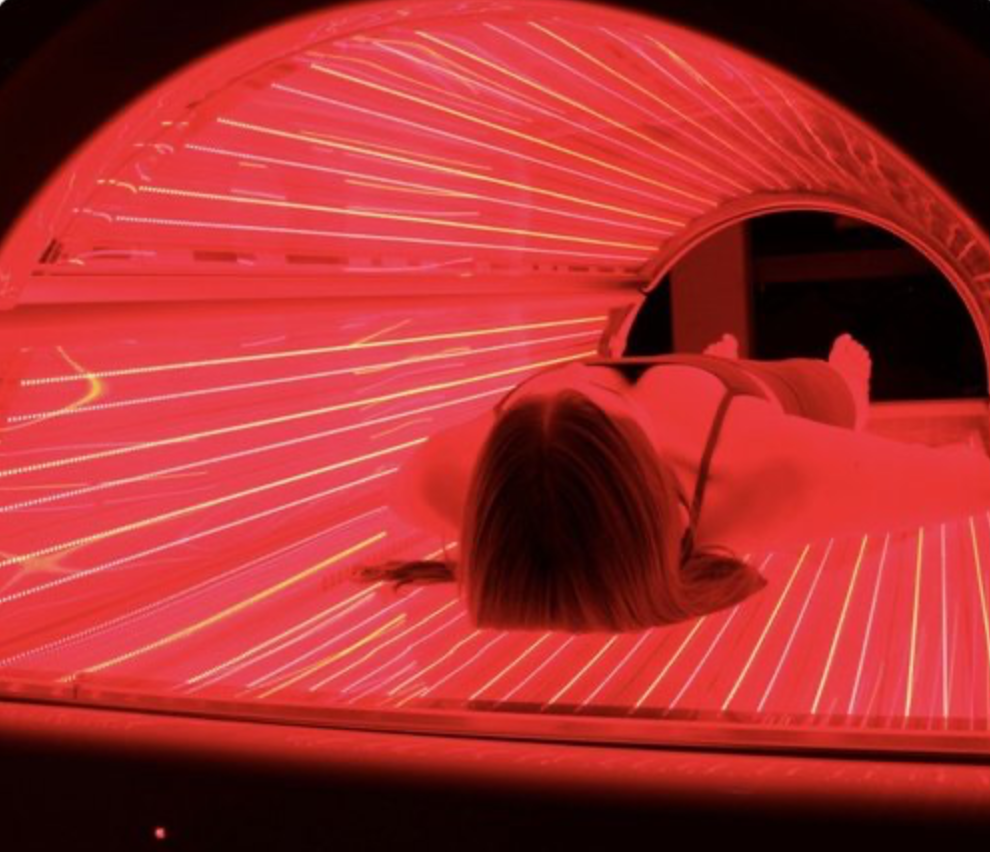
You’ve probably seen it by now. Someone's face eerily glowing red behind a plastic futuristic looking hockey mask. Good news, this isn't a modern cult following of horror flicks from the 1980's. The trend of Red Light therapy has reached nightstands in facemask form as a beauty tool. Even better news, there’s real science behind it and our new bed offers more wavelengths and benefits in a 10 minute session than the facemask versions. Plus, it’s not just for your face, but for your entire body, the top of your head to the bottom of your toes receives the benefits.
What is Red Light and Near-Infrared Light Therapy?
Red Light Therapy and Near-Infrared Light Therapy are forms of photobiomodulation, which is just a fancy way of saying we use specific wavelengths of light to influence how your cells function. Red light typically falls in the 600 to 700 nanometer range, while near-infrared light goes a bit deeper, usually around 800 to 1000 nanometers. The key difference, red light works more on the surface, think skin and superficial tissues. Near-infrared penetrates deeper, reaching muscles, joints, and even some structures below that. No heat damage, no UV exposure, and no tanning involved. This isn’t a beach substitute. It’s just giving your cells a gentle nudge to do their jobs better.
How Does It Work?
At the cellular level, this comes down to mitochondria (the powerhouse of the cell). When exposed to these light wavelengths, cells increase ATP production, which supports energy, repair, and function. It also improves blood flow, reduces oxidative stress, and helps to regulate inflammation.
How Often Should You Use It?
A good starting point is about three sessions per week. More is not always better, as your body still needs time to respond and adapt. But depending on your goals you may be able to use it 5 times a week.
The Benefits
Skin Health and Appearance: supports collagen production and improves skin quality.
Muscle Recovery and Performance: helps reduce soreness and supports faster recovery.
Joint Health and Pain Relief: may reduce stiffness and support joint comfort.
Sleep and Recovery: can support better sleep and overall recovery.
Fertility and Sexual Health: emerging research suggests benefits through improved cellular function and blood flow.
Overall Longevity and Cellular Health: supports mitochondrial health and reduces inflammation.
What to Expect
Sessions typically last 10 to 15 minutes. You lie down, relax, and let the light do its thing. Consistency matters more than intensity. The bed and light will be warm, but unlike a sauna you’ll be able to go back to work or go out after without needing a shower.
Who Should Not Use It
If pregnant, photosensitive, or on light-sensitive medications, consult a physician. Also consult your doctor for any existing medical conditions.
Final Thoughts
This therapy supports your body’s natural processes. It won’t replace exercise, nutrition, or sleep, but it can enhance them. So join us, bring your airpods, find that guided meditation, lie in the warmth, and enjoy the 15 mins just for you and your health!